
 We all love the beach whether it’s a sizzling summer day or a brisk walk collecting seashells. Here are some fun facts about one of your favorite places!
- Sandy beaches are mostly made of silica (SiO2) in the form of the mineral quartz.
- Depending on the type of sediment that makes up the sand, beaches can come in many different colors such as: white, gray, gold-yellow, brown, red and black.
- Beaches became popular as tourist attractions during the 18th century. Today, beach side towns and beach resort areas are a magnet for tourist who come to sunbathe, swim, stroll the beach, build sandcastles, surf and body board.
- The ocean covers 71% of the earth’s surface.
- According to the Guinness World Records, the tallest sandcastle ever made was constructed in Connecticut, USA, in May 2011. It was 11.53 m (37 ft 10 in) tall.
- More than twice the number of people visit America’s coasts and beaches than people visiting all state and national parks combined.
- The proportion of people that go to the beach that can’t swim is roughly 1 out of 3.
- The pressure at the deepest point in the ocean amounts to more than 11,318 tons/sq. m, which is equal to one person trying to hold up 50 jumbo jets.
- Each year, governments take in $320 in taxes from beach tourists for every dollar is spends on beach restoration.
- Polls reveal that at least 44% of all Americans were planning a beach vacation.



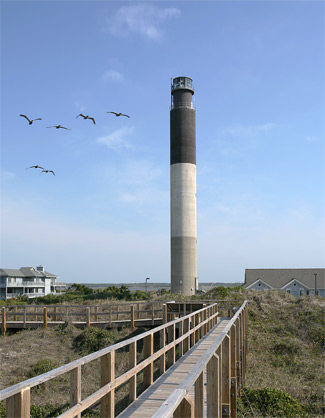
 The Oak Island Lighthouse was completed in 1958. It was once the second brightest light in the world. The total cost of construction was $110,000.00 (it would be millions of dollars today!).
 There is no spiral staircase as are found in most older lighthouses, but instead there is a series of ships ladders with a total of 131 steps to the lantern gallery level.
 The smaller diameter concrete section at the top was formed with stationary metal forms after the top floor was poured. Windows in the tower were constructed of stainless steel but sashes have been replace with vinyl.
 When these lamps were in use the Oak Island light was the second brightest in the world. When the upper bank of lights, comprising of 24 inch theatrical lights and 1,000 watt Quartz lamps became the primary beacon and the bottom were decommissioned, it lost that distinction!